
Designing an international forum or conference: identity, wayfinding and presentations
How to design an international forum or conference: event identity, venue wayfinding, stage and screens, speaker presentations, digital channels and a preparation timeline.
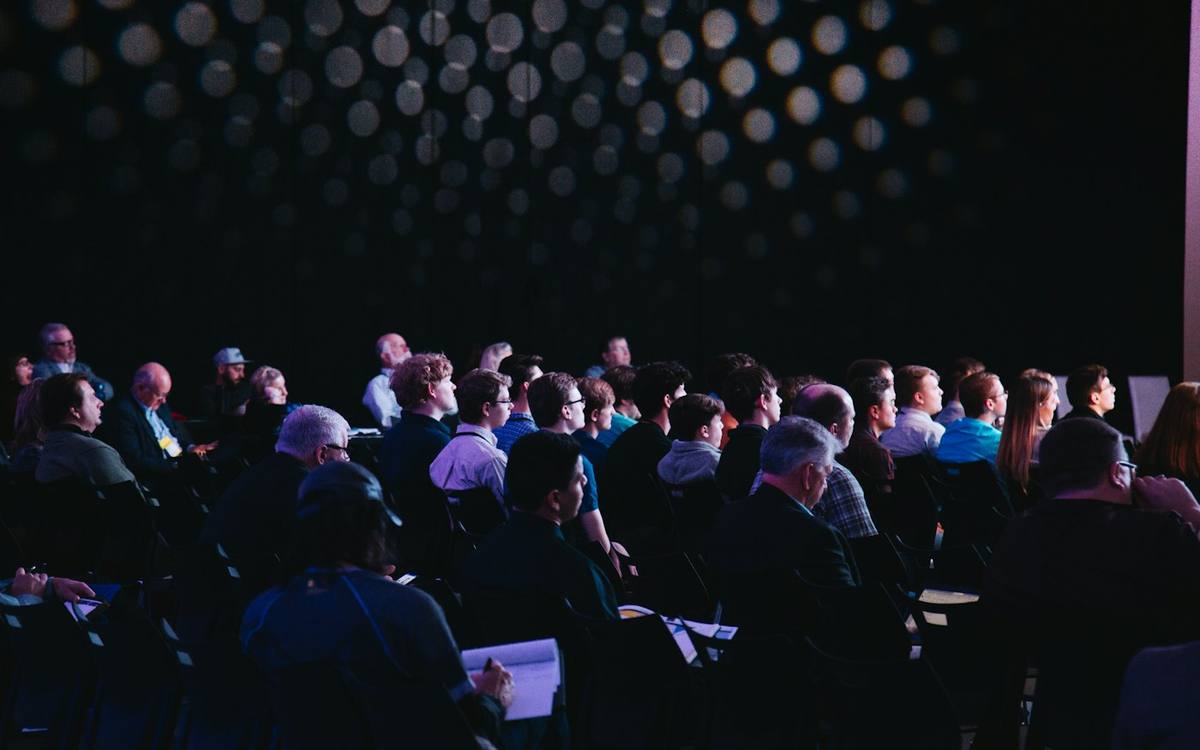
Designing an international forum or conference means creating a single visual system for the event: logo and style, venue wayfinding, stage and screens, badges, speaker presentations, the website and social media. Its job is not only to make the event look good but to help hundreds of participants find their way quickly and to let organisers appear confident in front of guests, partners and the press.
Forums, summits and industry conferences run by ministries, agencies, state companies and associations require particular precision: many delegations, several languages, a dense programme and minimal time for corrections. Below is a practical look at what event design consists of and how to organise the work so that nothing has to be assembled the night before.
Event identity: where design begins
The foundation of the visual system is the identity of the specific event. It can be standalone or built on the organiser's corporate identity, but in either case it should meet several requirements:
- An idea. The forum's theme is expressed graphically, for example through an image of connection, growth or openness, or a motif linked to the host region.
- Name and logo. Readable in three languages and at small sizes: on a badge, an avatar or the corner of a broadcast screen.
- Colours and typefaces. A palette that works both on a bright screen and on a dark stage, and typefaces that support Latin and Cyrillic.
- Flexible graphic elements. Patterns, shapes and frames that scale from a facade banner to a social media card.
- Relationship with organisers and partners. Rules for placing the logos of organisers, partners and sponsors, their order and sizes.
If the forum is annual, the identity should be designed as a series: a permanent core with a changing accent each year. The event then builds recognition rather than starting from scratch every time.
Venue wayfinding
Wayfinding is something participants notice only when it is missing. An international forum often takes place on several floors or in several halls, with parallel sessions, registration areas, an exhibition and coffee breaks. Things to plan:
- a venue plan with visitor flows: entrance, registration, cloakroom, main hall, sessions, exhibition, catering and press area;
- a sign hierarchy: large directional signs, signs at hall doors and information desks;
- consistent hall names across all materials: programme, signs, app and website;
- pictograms and languages, usually Uzbek, English and Russian, sometimes the language of a partner country;
- screens outside halls showing the current and next session;
- accessibility: routes for people with limited mobility, text contrast and size.
Before printing, it helps to walk the venue with the layouts: real distances, lighting and viewing angles often require larger sizes and repositioned signs.
Stage, screens and broadcast
The main stage is the most visible element of the event: it is seen by the hall, the cameras and everyone watching the broadcast or photos. Practical principles:
- Backdrop and screens are designed together. The backdrop graphics should not clash with speaker presentations on screen.
- The event name is in frame. Any photo or video from the stage should show which forum it is.
- Dark backgrounds on screens often work better in a hall with stage lighting and dazzle the cameras less.
- Broadcast captions and lower thirds: the speaker's name, position and organisation in several languages, plus the session topic.
- Holding slides: before the start, during breaks and between sessions, with the programme and useful information.
- The lectern and name cards on the presidium table in the same style, with names and positions spelled correctly.
Protocol matters need separate attention. At official events, the correct use of state symbols, the flags of participating countries and the official names of organisations is essential. The order of flags, the spelling of positions and names in several languages and the rules for signing agreements on stage are best agreed with the protocol team in advance and fixed in the layouts rather than decided on the spot. It also helps to prepare a separate set of graphics for ceremonies: signing memoranda, award presentations and joint photos of delegations.
Speaker presentations: a single template
One of the most common problems at forums is inconsistent presentations. Each speaker arrives with their own file in their own style, in different aspect ratios and with fonts that are missing from the director's computer. The solution is an event presentation template and clear rules:
- a template in the right screen format with a title slide, a section divider and several content layouts;
- short instructions: submission deadlines, file format, embedded fonts and videos as separate files;
- a single deadline for submitting presentations in advance and a person responsible for checking them;
- a technical check on the venue computer: fonts, video and transitions;
- PDF backups for every talk.
For official delegations and ministries, it also helps to provide guidance on the structure of the talk. We described such rules in our article on presentation standards for government agencies, and they work well on a forum stage too.
Good forum design quietly does the main job: no participant had to ask where to go, no speaker worried about their slides and every photo shows which event it is.
Print and souvenir materials
Despite digitalisation, an international event still has a set of physical materials:
- Badges with participant categories clearly distinguished by colour or a stripe, a large name and a QR code if needed;
- the programme, as a compact printed version and a full digital one;
- a press wall for photos and interviews;
- folders, notebooks and souvenirs, fewer but of better quality, with sustainability in mind;
- name cards, stickers and partner exhibition stands designed according to common rules.
For print, it is important to agree technical requirements with suppliers in advance: formats, bleed, colour models and materials. A mistake at this stage is the most expensive, because there is usually no time to reprint.
Good practice is to compile a single table of all materials in advance: what it is, size, material, quantity, supplier, owner and deadline. This table becomes a working tool for organisers, designers and the printer, and shows at any stage what is ready and what is still awaiting approval.
The event's digital channels
A forum starts long before the opening and continues after the closing. The digital part of the design includes:
- an event page or website with the programme, speakers, registration, venue plan and practical information for guests;
- social media templates: speaker announcements, the day's programme, quotes and highlights;
- materials for partners and media: logos, banners and a press kit;
- design for the online broadcast and session recordings;
- wrap-up materials: a photo report, a video and a report for participants and partners.
Preparation timeline: what to do and when
Timing depends on scale, but the sequence is almost always the same. An approximate guide for a large event:
- 3 to 4 months before: concept, identity, event website or page and first announcements.
- 2 months before: speaker presentation template, partner pack and venue and wayfinding plan.
- 1 month before: layouts for the stage, screens, signs, badges and print materials; coordination with suppliers.
- 2 weeks before: collecting speaker presentations, the final programme and printing.
- A few days before: installation, checking wayfinding on site and a technical rehearsal.
- After the event: wrap-up materials and analysis of what to improve next time.
Typical mistakes include starting late, changing the programme without updating wayfinding, having no single person responsible for the visual side and approving layouts with too many people at once. If you need event identity, wayfinding, stage design and speaker templates in one system, the Dasta Creative team helps with this as part of its branding service.

Author
Feruzbek Otaqulov
Founder of Dasta Creative
I help companies and public organisations in Uzbekistan build brands, websites and digital products, and adopt AI safely. I share my experience on LinkedIn.
Frequently asked questions
For a large international event, roughly three to four months ahead. That leaves enough time for identity, the website, work with speakers and printing without rush.
Yes. It makes talks visually coherent, reduces technical risks and helps the broadcast director work with the files.
Usually Uzbek and English, often Russian too, and sometimes the language of a partner country. Consistent pictograms and identical hall names in all materials matter.
According to rules approved in advance: partner categories, order, sizes and placement zones. This avoids disputes and keeps materials tidy.
Yes, if the event is regular. It is best to design the style as a series with a permanent core and a changing accent each year.


