
AI-generated logos: risks, copyright and uniqueness
An AI tool produces a logo in seconds — but can you register it, who owns the rights, and could it resemble someone else's mark? We look at the risks and the safe ways to use AI.
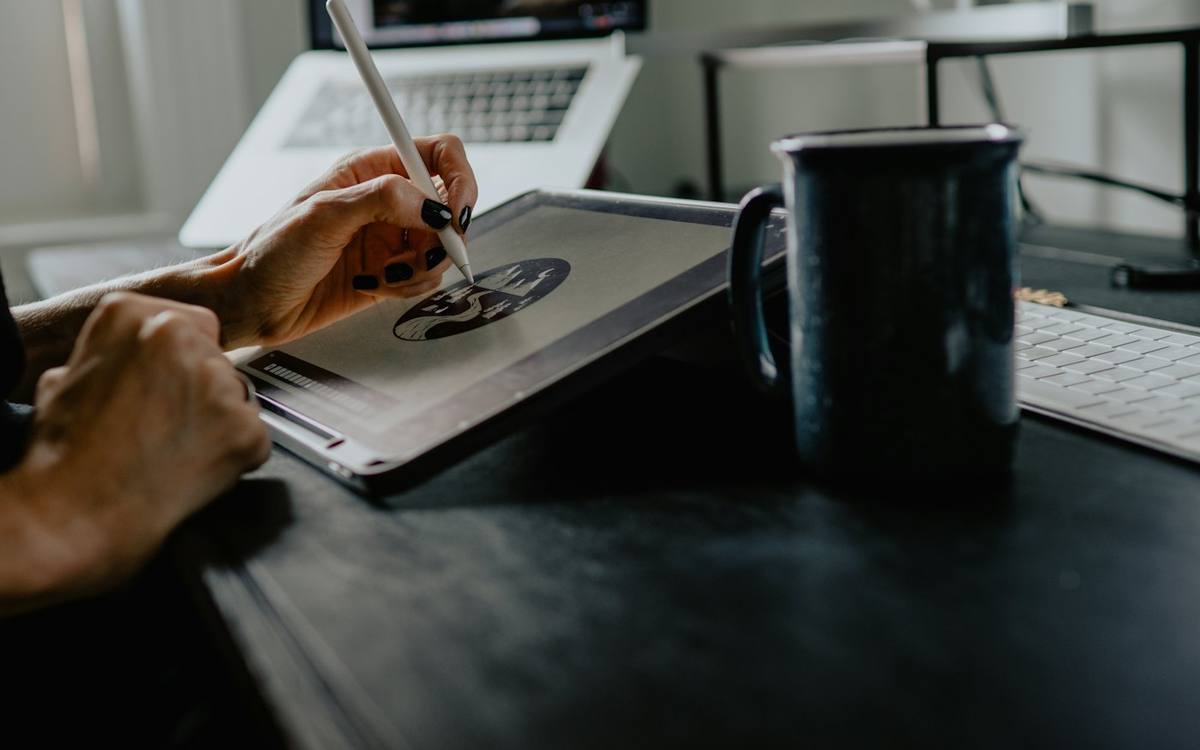
You can generate a logo with AI, but using the result as your brand's main mark is risky. The key problems are the unclear copyright status, difficulty registering a trademark, the risk of resembling other logos, and technical limitations: a raster image with no vector file and no system of versions. The safe approach is to use AI for exploring ideas and to finalise the mark with a designer.
Why AI is so tempting for logos
It is fast, cheap and produces dozens of options in minutes. For a test concept, an internal project or a one-day event, that can be a reasonable choice. Problems start when a generated mark becomes the face of a company that plans to grow for years.
Risk 1. Copyright
In many jurisdictions, copyright protects the result of human creative work. In the United States, for example, the Copyright Office takes the position that images created entirely by a machine without meaningful human creative input cannot be registered for copyright. Legislation in other countries, including Uzbekistan, is still evolving with respect to AI content, and there is no settled practice yet.
In practice this means you may struggle to prove the logo is yours and to stop others from using the same or a similar one. Generation services also have different terms of use, so read carefully which rights your plan grants to the output.
Risk 2. Trademark registration
A trademark protects not authorship but a sign that distinguishes your goods and services. In theory a generated mark can be registered, but there are pitfalls:
- AI models tend to produce generic, "average" forms — little houses, leaves, abstract waves — that are hard to accept as distinctive;
- there is a higher risk of confusing similarity with existing registered marks;
- owners of similar marks may oppose the application.
Trademark registration is covered in more detail in our article on naming and protecting a name.
Risk 3. Uniqueness and similarity to other marks
Models are trained on huge image collections, including existing logos. The output may unintentionally reproduce recognisable elements of well-known brands. You cannot see what a particular option is based on, and you cannot be sure a similar mark has not been generated for someone else from a similar prompt.
Risk 4. Technical limitations
- Raster instead of vector. Most generators output a picture, while signage, print and engraving need vector files. Auto-tracing often produces messy outlines.
- Text. AI still frequently distorts letters, and Latin script with apostrophes such as o' and g', or Cyrillic, can come out wrong.
- No system. You need horizontal and vertical versions, a simplified mark, a single-colour version and clear-space rules — a generator does not provide them.
- Scaling. Details that look good in a large image vanish on an icon.
AI is good at generating pictures that look like logos. But a logo is not a picture — it is a legally protectable, technically sound and strategically grounded mark.
What a hybrid process looks like: AI plus a designer
There is no need to abandon AI altogether. It is wiser to use it where it genuinely speeds things up and leave to people the parts where accountability and quality matter. A typical hybrid process looks like this:
- Brief and strategy — human. Positioning, audience, competitors, constraints. AI can help structure notes, but the team makes the meaningful decisions.
- Visual exploration — AI and human. Generating dozens of images, colour combinations and stylistic directions for a mood board. The designer selects and explains what fits the task.
- Sketches — human. The core idea of the mark is born on paper or in a vector editor: the designer looks for a form that carries meaning, not one that merely looks striking.
- Variations — AI as an assistant. Quickly checking how the idea looks in different styles, on different backgrounds and touchpoints.
- Final artwork — human. Building the mark in vector, optical corrections, typography and the version system.
- Checks — human. Searching for similar marks, legibility in all languages, small-size tests, file preparation.
With this approach AI saves time on routine and research, while the final mark remains the creative work of specific people — which matters for both quality and rights. If you work with an agency or freelancer, ask directly how they use AI. It is a normal question, and an honest answer is a sign of a mature partner.
When a generated logo is acceptable — and when it is not
The risks are not the same for everyone. A simple rule: the longer the brand will live and the more will be invested in it, the more important it is that the mark is unique and protected.
- Acceptable: testing a hypothesis before launch, an internal project or club, a one-off event, a temporary placeholder until a proper mark is developed.
- With caution: a small local business that does not yet plan to register a trademark — provided the mark has been redrawn in vector and checked for similarity.
- Not advisable: retail product packaging, franchising, export, chains with signage and vehicles, companies planning to raise investment. Here a rights dispute or a forced logo change would cost far too much.
A typical scenario: a startup launches with an image from a generator; a year later the business grows and needs signage, packaging and trademark registration. It turns out there is no vector source, the letters are distorted and a similar symbol is already in use in the same niche. In the end the logo is redesigned anyway — but only after customers have grown used to it.
What to put in the contract with your contractor
If a freelancer or agency is making the logo, settle the AI question in the contract rather than verbally:
- Disclosure of tools. The contractor states whether generative services were used and at which stage.
- Originality warranty. The contractor confirms that the mark is not copied and has been checked for similarity to well-known marks.
- Transfer of rights. It is clearly stated which rights pass to the client and from what moment.
- Source files. Vector sources, fonts and all versions of the mark are part of the deliverables.
- Intermediate materials. Sketches and working versions are kept — they help confirm human creative input if a dispute arises.
How to use AI safely
- For exploration. Generate mood boards, style directions and colour combinations to agree on a visual direction faster.
- For the brief. Show a designer generated examples to illustrate what you like — it saves discussion time.
- For temporary needs. A pilot project, a test page, an internal event — where long-term protection is not required.
- Final mark with human involvement. A designer reworks the idea, builds the mark in vector, checks uniqueness and prepares the version system. Substantial human creative input strengthens your position on rights.
- Document the process. Keep sketches, intermediate versions and a contract with the designer transferring the rights.
Checklist if your logo is already AI-generated
- Check the service's terms: what rights to the output did you receive?
- Run a reverse image search and a preliminary trademark database search.
- Order a vector redraw and adaptive versions.
- Check that the text is legible in all of your brand's languages.
- Consult a lawyer or patent attorney before filing for registration.
AI has already become a useful tool in designers' work — we use it ourselves for exploring ideas and speeding up routine tasks. But the final decision on a mark that will represent a company for years requires expertise. If you want to refine a generated idea or create a unique mark from scratch, the Dasta Creative team provides logo design with full rights transfer and a complete set of versions.

Author
Feruzbek Otaqulov
Founder of Dasta Creative
I help companies and public organisations in Uzbekistan build brands, websites and digital products, and adopt AI safely. I share my experience on LinkedIn.
Frequently asked questions
In theory yes, if the mark is distinctive and not similar to existing registrations. But generic forms and similarity risks make refusal more likely, so check before filing.
It depends on the law and the service's terms. In several countries fully generated images are not protected by copyright, so substantial human rework improves protection.
For testing an idea, yes. But if the business plans to grow, it is better to create a unique, protectable vector mark early.
Typically for mood boards, exploring directions and quick variations. The final mark is built by hand in vector and checked for uniqueness.


